Wednesday, 17 August 2011

Charak Puja-one of the traditional folk festival in rural Bangladesh

Arrangement team of the Charak Puja festival comming with a Charak tree 

Arrangement team of the Charak Puja festival setting up the Charak tree

A member of the Charak Puja festival team blowing a fluit while setting the Charak tree

Upper part view of the Charak Tree

A snake charmer is playing with snakes under Charak Puja festival and Mela 

Young gyes are playing drums under Charak Puja festival and Mela 

Cosmetics Kali and Shiva are ready to perform a scene from the myth of
 Hindu Goddess Kali on the occation of Charak Puja festival

Cosmetics Kali and other devotees are performmimg a scene from the myth of
 Hindu Goddess Kali on the occation of the Charak Puja festival

Cosmetics Narod and other devotees are performmimg a scene from the myth of
 Hindu Goddess Kali on the occation of the Charak Puja festival

Preparation for setting hook (Borshi) on back of a Charkia (performer of Charak Puja)


Hooks have been set on back of a Charkia (performer of Charak Puja) and ready
to hang to move around the Charak Tree under Charak Puja or Nil Puja


An ascetic devotee ready to hang from a spinning wheel attached with Charak
Tree on the occation of Charak Puja


An ascetic devotee hangs from a spinning wheel attached with Charak
Tree on the occation of Charak Puja


Charak Puja is a traditional Bangladeshi festival celebrated mainly in the rural areas by the Hindus. This Puja is also known as ’’Nil Puja’’, ’’ Hajrha Puja’’ or ‘’Batri  Charak’’. The believers of the Hindu religion celebrate this puja on the last day of Chaitra month (Chaitra is the last month of Bangla calendar). Charak puja is also popular as ‘’Chaitra Songkranti’’. The day of Charak Puja is also known as ‘’Gajan’’. The Hindus believe that the festival will carry prosperity by eliminating the sorrow and the sufferings of the previous year. The Puja festival is actually a festival to satisfy ‘’Lord Shiva’ ’the great ‘’Debadideb’’ of Hindu religion and to be blessed with happiness and prosperity by the Lord Shiva. Though the festival takes place on the mid night of ‘’Chaitra Songkranti’’ , the preparation phase usually starts before one month of the puja day.
In fact, the last day of Chaitra month is observed all over rural Bangladesh as ‘’Chaitra Sangkranti’’. On this day rural people arrange village fair ‘’Mela’’ and some other activities such as kite flying. Charak Puja is not celebrated every where, due to its special ritual and religion bond. With the combination of Charak Puja the festival gets another dimension, attraction and test. 
Charak Puja is performed by usually ten to twelve members, including both men and women. The bearers of the ritual are called Charkia and the main performer Deoboinshi. Charak Puja starts with the fasting period. Though the festival is celebrated on the midnight of Chaitra Sankranti, the preparations start at least a month in advance. The devotees keep fast for one complete month before performing the rituals. During this period the devotees cann’t eat from morning to evening and live strictly on fruits and do their daily worship. This time bound ritual is called ‘’Brata’’. Many devotees observe a fast on the day of Charak Puja, until the midnight puja takes place.
The arrangement team of the festival go from village to village and collects the necessary items, like paddy, oil, sugar, salt, honey, money and other items with the arranged cosmetics such as Shiva, Parvati and Narod. The cosmetics Shiva is locally called ‘’Nil Pagol’’ or ‘’Jal Katha’’.
 The rituals of Charak Puja , a way to show the miracle of ‘’Lord Shiva’’ are unique and at times a little risky. Around mid night, the devotees gather to offer prayers to the Lord Shiva. Then the Puja arrangers make a stage of bamboo. The average height of these stages are about 3 to 5 meter. The ‘’Charkia’’ is tied with a ‘’Borshi’’ (a kind of hook) at the back and then is moved around a bar with a long roap. The ground area of the bamboo stage is filled up with knives, glass pieces and thorns. Devotees fall on this ground. The excitement reaches to apex when the performers rise and escape without a single wound. They believe that the blessing of ‘’Lord Shiva’’ keep them safe from all the possible harms. The devotees have other ways to show the god’s blessing. They impale their body parts without feeling any pain.
In Bangladesh, Charak Puja is frequently found to take place at Patuakhali, Pabna, Sylhet, Gopalganj, Khulna, Jessor, Manikgonj and some other districts. The next day of Charak Puja is celebrated as ‘’Poila/Pohela Baisakh or Nabo Barsha (Bangla new year) all over Bangladesh.

S: en.wikipedia.org; indianetzone.com; thetravelphotographer.blogspot.com; bangalinet.com; organiser.org;viewbookphotostory.com/2010/09/charak-puja;
Special courtesy :sachalayatan.com/mustafiz/38644; tobangladesh.com;

Friday, 1 July 2011

Mission Impossible !!!!!

On the right side, this is a poem written in Bangla by Abu Hassan Shahriar. He is considered as one of the most creative poet of 80's in Bangla literature. This poem is collected from his ''Serestra Kobita''(Best Poems) book and the poet selected his best poems in this book, published from ''Agami Prokashoni'' in Februari 2005, 2nd edition.
Abu Hassan Shahriar was born in the 25th June,1959 in Rajshahi, Bangladesh.His native root is at KoddaKrishnapur in Sirajgonj, Bangladesh.His father professor Sirajuddin was Chairman of Bangladesh Text book Board. Abu Hassan Shahriar is not only a poet but also a writer, a journalist, a social worker and a traveller. His first poetry book is ''Ontohin Mayabi Vromon''. He has written many poetry books, articles, short stories and has edited some books also.
Now a days in this world have 195 independent countries. And  have more than 6000 languages, but many of these languages don't have any writing forms, exists only in speaking forms. Anyway, it is to say that now a days Bangladeshi people -- Bangla speaking people you can find all over the world.
So, I like to make an appeal to all the Bangla speaking people around the world(even to the other foreigners those who can read, write and speak Bangla)----please translate this poem in any other language if possible.

So, turn the ''Mission Impossible'' to ''Mission Possible''.

Tuesday, 14 June 2011

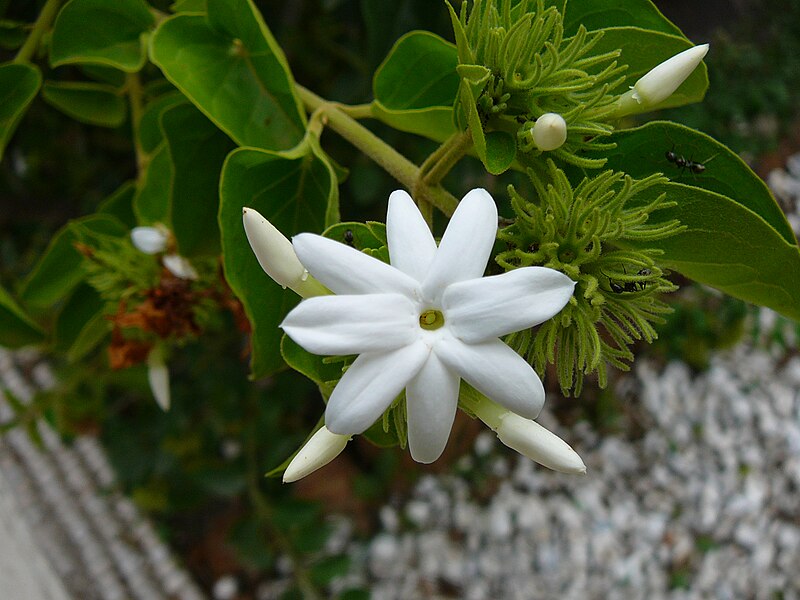
Jasmine/Arabian jasmine flower (Beli ful) - strong scented flower in Bangladesh


চিত্র:JasminumSambac2.jpg
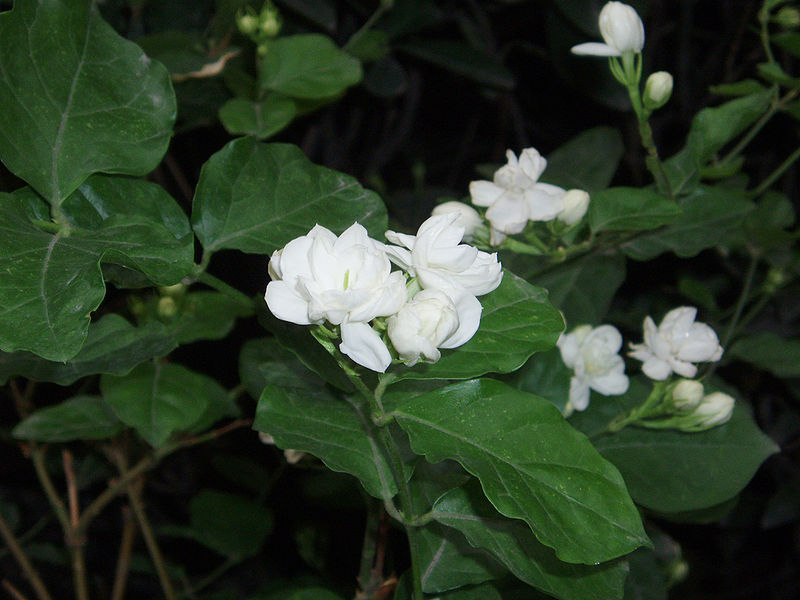
Jasmine/Arabian jasmine flowers and leaves (Beli ful o pata)
চিত্র:Jasminum multiflorum 0001.jpg
Another variant of jasmine/Arabian jasmine flower (Beli ful)
File:My Garden Flower 10.JPG
Another variant of jasmine/Arabian jasmine flower (Beli ful)
File:മുല്ല.jpg
Bud of a jasmine/Arabian jasmine flower (Beli fuler kuri)
File:Jasmine Bud in Chennai during Spring.JPG
Yielding bud of a jasmine/Arabian jasmine flower (Beli ful kuri)
File:Jasminum sambac 'Grand Duke of Tuscany'.jpg
Jasminum sambac - Jasmine/Arabian jasmine flower (Beli ful)
File:JasminumSambac3.jpg
Another variant of jasmine/Arabian jasmine flower (Beli ful)
File:മുല്ലപ്പൂക്കൾ.JPG
Jasmine/Arabian jasmine flower (Beli ful)
File:മുല്ലപ്പൂവ്.jpg
  Jasmine/Arabian jasmine flower (Beli ful)
File:മുല്ലപ്പൂമൊട്ട്.jpg
Jasmine/Arabian jasmine flower's buds (Beli fuler kuri)
File:Flowers worn in hair, Tamil Nadu.jpg
Bangladeshi girls with jasmine flowers garlands as part of
their hair decoration (Beli fuler mala)
File:Garlands of Jasmine flowers.JPG
Bangladeshi girls with jasmine flowers garlands as part of
their hair decoration (Beli fuler mala)

A Bangladeshi girl with jasmine flowers garlands as part of
her hair decoration (Beli fuler mala)


Jasmine Hair
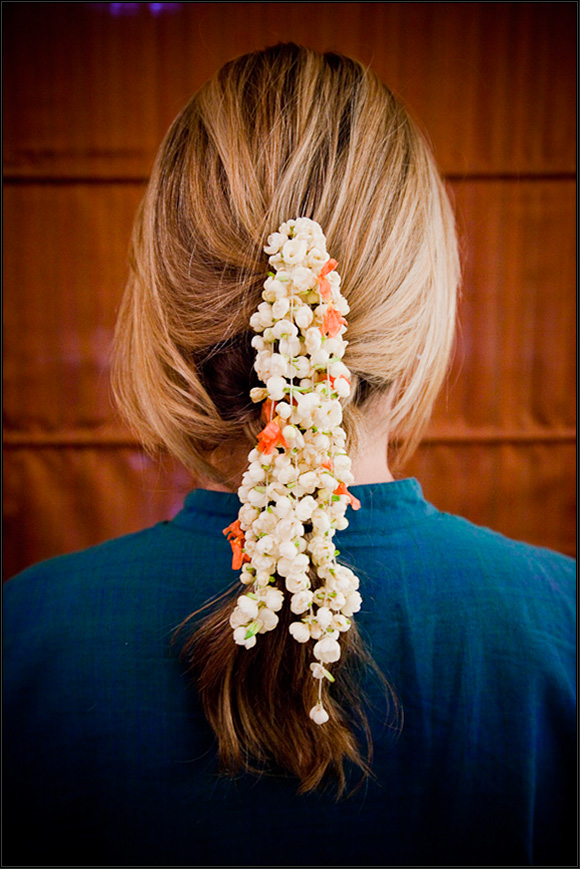
A blond woman with jasmine flowers garlands(Beli fuler mala)

Garland of jasmine/Arabian jasmine (Beli fuler mala)
Threading Garlands of Jasmine Flowers
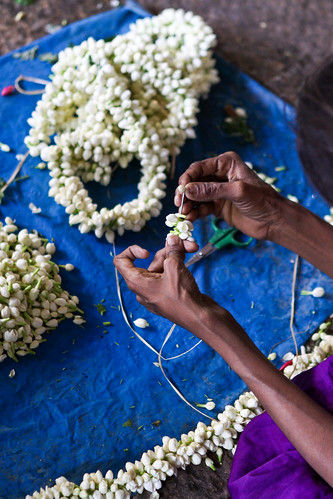
Threading wreath with jasmine flower(Beli fuler mala gatha)

Garlands of jasmine/Arabian jasmine flowers ready to sell in a market

Jasmine flower is commonly known as Beli ful in Bangladesh. In English this flower is also widely known as ''Arabian jasmine''. Scientific name of jasmine/Arabian jasmine flower (Beli ful) is Jasminum sambac. It belongs to the family Oleaceae and specis is J.sambac. Jasmine/Arabian jasmine flower (Beli ful) is the national flower of Philippine and Indonesia.
Jasmine/Arabian jasmine flower(Beli ful) is native to South and South East Asia, that is Bangladesh and eastern part of India. This flower is widely grown throughout the tropical areas from the Arabian peninsula to South East Asia and the Pacific Ocean region.
Jasmine/Arabian jasmine(Beli ful) has been cultivated for thousand of years not only for the beauty of its small,white, star like flowers, but it has also been prized for its intoxicating scent.
This flower plant is a small shrub or vine growing upto 0,5 to 3 meter in height. The leaves of the jasmine/Arabian jasmine flower(Beli ful) plant are ovate, 4 to 12,5 cm long and 2 to 7,5 cm wide. The flowers bloom all through out the year and are produced in clusters of 3 to 12 together at the ends of branches. They are strongly scented, with a white corolla 2 to 3 cm in diameter with 5 to 9 lobes.The flowers open at night, usually around 6 to 8 in the evening and close in the morning. Infact, jasmine/Arabian jasmine flower(Beli ful) is widely cultivated for their attractive and sweetly fragrant flowers. Tipically, the flowers are harvested as buds during early morning. The flowers are used for perfumes and for making tea. The Hindu and the Buddist offer this flower to their goddes and to the Buddha.
There are numerous cultivars of Jasminum sambac which differ from each other by the shape of leaves and the structure of the corolla. There are at least 20 to 30 different varieties of jasmine plant. Only a few varieties reproduce by seed in the wild. Other wise, generally cultivated Jasminum sambac do not bear seeds and the plant is reproduced solely by cuttings, layering, marcotting and other methodsof asexual propagation.
Jasmine/Arabian jasmine flower(Beli ful) is one of the most important flower in wedding ceremonies for Indian, Bangladeshi people and also for Indonesians, especially in the Java island. In Bangladesh and India women use the flowers in their hair for their beautiful fragrance.

S: en.wikipedia.org; care2.com(jasmine,indian flower);toptropicals.com; floridata.com;

Read also: White water lily or Sada Shapla is the national flower of Bangladesh
                   Kadam/Kadambo is a rainy season flower in Bangladesh
                   Water hyacinth (Kochuripana) beauty and death
                   Silk Cotton tree - Shimul ful/Shimul Tular Gash

Tuesday, 7 June 2011

Sajid Ali Howlader- youngest biologist who described a new species of frog from Bangladesh

Mohammad Sajid Ali Howlader
Fejervarya asmati is a scientific name of a new species of frog that has recently discovered. This type of frog is now commonly known as Bangladeshi Cricket frog. A young biologist from Bangladesh Mohammad Sajid Ali Howlader has found this frog and has described about this frog.
This is unique that for the first time a species of wild life(amphibians,reptiles,mammals) has discovered by any Bangladeshi biologist from Bangladesh. All of our wild life species were described by European biologists. British biologist Theobald had described a new species of frog from Jessore of Bangladesh in 1868(this species is now treated as invalid species). Then after 150 years, a new species of frog is discovered from Chittagong region of Bangladesh. Mohammed Sajid Ali Howlader has named this frog after his teacher's name Dr.Ghazi S M Asmat professor of Zoology Department in Chittagong University.

Fejervarya asmati - new species frog

Mohammad Sajid Ali Howlader found this frog at ''Katapahar'' area in Chittagong University campus.Upto now in the world zoologist have discovered, described and have enlisted 650 species of frogs. And Sajid Ali Howlader can identify 26 species of frogs on their vocal call. Before publish the artical he had to cross check with all of these species characteristics, types, nature and to be sure that its a new one species. Under a long period he had to keep contact with the renowned and famous zoologist of different countries including Portugal, Italy, USA, UK, Germany, Japan for sound analysis and other characteristics of all species of frogs. Mohammed Sajid Ali Howlader found this frog in May,2008 and submitted his article to the most renowned Zootaxa joutnal authority January,2010. Journal authority checked all the informations and placed more than 500 questions about his article-related the new species.After three times reviewing the article, authority accepted his article on19th January,2011 that Fejervarya asmati is a new species and then published his article on the 9th February 2011,volume no. 2761.
Fejervarya asmati frog is 29-33 mm in size. The frog is characterized by having butterfly-shaped vocal marking, calling characters, morphological ratios of body parts, relative length of fingers. It looks little bit olive in colour. On its back it has red spots on the white mark.
Personal lab in his student hostel's room
Sajid Ali Howlader is 26 years old and just completes his bachelor degree from Chittagong University of Bangladesh. He has done this job with self-funding and self interest. However, it is quite rare that he described this new species independently or without any guidance or co-authors. Interestingly he has no personal computer or digital camera and manage those on loan from others. According to the information of Dr.Darrel Frost, curator of American Museum of Natural History, Sajid Ali Howlader is the youngest in taxonomist in herpetology who has described a new species independently or without any coauthors.Mohammed Sajid Ali Howlader was born in Shahabag, Dhaka, Bangladesh on 28 October, 1985. He is younger child of Late-Md.Keramat Ali Howlader and Mrs.Noorjahan Begum. He has one elder brother and sister. He completed SSC examination from B.C.S.I.R. High School, Dhaka on 2001 and HSC examination from Bangladesh Navy College, Dhaka Cant. in the year 2003. Besides his studies he engaged himself in extra curriculam activities. He has identified 25 species of snakes in the Wildlife Museum of Bangladesh Forest Research Institute.
In an interview Sajid told,'' I am always trying something better for world. I want to work for nature and herpetofauna. I pass my every day with them. ......I have aimed to research on evolution biology for next 20 years.''

S: sajidpabc.webs.com; biggani.com; ittefaq.com.bd(2011-03-12);
Sunday, 5 June 2011

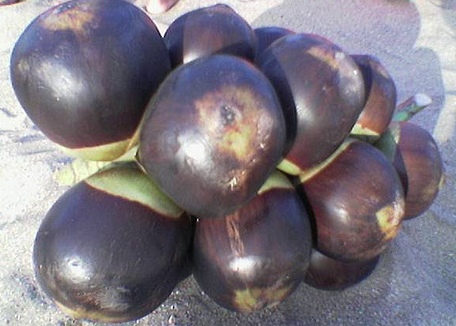
Asian Palmyra Palm/Asian Palm Fruit (Tal/Taal fal) in Bangladesh


Asian palmyra palm/Asian palm/Toddy palm tree(Tal/Taal gaas)
Asian palmyra palm/Sugar palm tree(Tal/Taal gaas) in rural Bangla

Asian palmyra palm/Asian palm tree(Tal/Taal gaas) in rural Bangla


Asian palmyra palm/Sugar palm fruit(Tal/Taal) in clusters in the tree
Asian palmyra palm in Bangladesh
Asian palmyra palm/Toddy palm fruit(Tal/Taal) in clusters in the tree
Asian palmyra palm in Bangladesh
Asian palmyra palm/Sugar palm fruit(Tal/Taal) in clusters in the tree
File:FRUIT, LEAVES & BAYA's NESTS I IMG 5108.jpg
Babui pakhi/weaver bird's nests hanging from the Asian palm (Tal/Taal) tree
Asian palmyra palm in Bangladesh
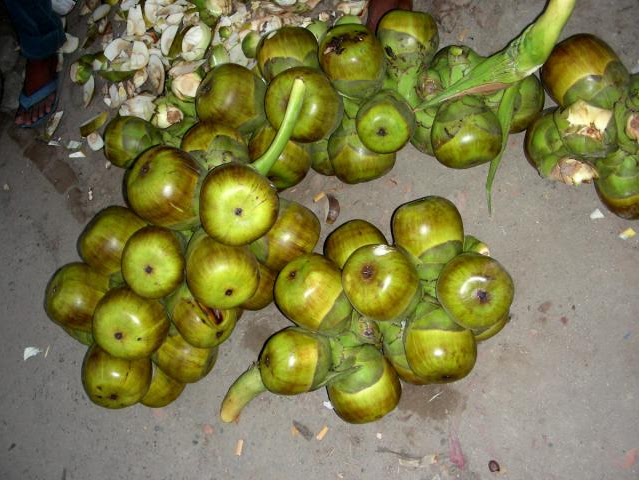
Green Asian Palmyra Palm/Asian Palm Fruit (Kochi Tal/Taal fal)
Asian palmyra palm in Bangladesh
Green Asian Palmyra Palm/Toddy Palm Fruit (Kochi Tal/Taal fal)
Green Asian Palmyra Palm/Sugar Palm Fruit (Kochi Tal/Taal fal)

Asian palmyra palm in Bangladesh
Green Asian Palmyra Palm Fruit's seed sockets (Kochi Tal/Taal fal)
Asian palmyra palm in Bangladesh
Green Asian Palmyra Palm Fruit's seed sockets (Kochi Tal/Taal fal)

Green Asian Palmyra Palm Fruit's jelly like seed sockets (Kochi Tal/Taal fal)


Climbing on palm(Tal/Taal) tree to collect juice
Collected palm juice(Tal/Taal ross) in earthen pots

    Ripe Toddy palm/Sugar palm/Palmyra palm(Tal/Taal)
Ripe Asian palmyra palm/Asian palm(paka Tal/Taal)


         Ripe palm(paka Tal/Taal fal) fruit with fiber and pulp and seeds

Hard seeds or stones of Asian palmyra palm fruit(Tal/Taal faler aati)

Asian palmyra palm or Asian palm is known as Tal/Taal in Bangladesh.Its scientific name is Borassus flabellifer.It belongs to Arecaceae family.It has some other english names.In english it is also known as Toddy palm, Sugar palm, Cambodian palm and Ice apple.
Asian palmyra palm(Tal/Taal) tree is a robust tree and can live 100 years or more and reach a hight  of 30 m, with a canopy of leaves several dozen fronds spreading 3 m across.Young palmyra palms(Tal/Taal) grow slowly in the beginning but then grow faster with age.Palmyra palm(Tal/Taal) is a large palm tree, usually 10 to 25 meters high, but sometimes growing up to 30 m tall.It may take 20 years until the first harvest.There are separate male and female trees.Male and female inflorescences are tapped to produce a sweet sap.
Fruits grow in clusters. The fruits are round and have a dark-brown color on the bottom part and a green color on the top. The color changes to dark-yellow when it ripens. Fruits have a diameter of 13-20 cm.When the fruits are cut you find inside three jelly seed  sockets with pale-white translucent flesh, similar to that of the lychee but with a milder flavor and no pit which can be eaten. The flesh has a sweet taste. The jelly part of the fruit is covered with a thin, yellowish-brown skin.Fruits are harvested by hands.Climb the tree and cut clusters of fruits with a hatchet or big knife.
Palm shoot is cut and the juice is traditionally collected in hanging earthen pot.The juice so collected before morning is refreshing and light drink called ''Taaler ross'' has extremely cool in sensation, and sugary sweet taste. The juice collected in evening or after fermentation becomes sour - is called ''Tari ''in Bangla.Tari is consumed mostly by villagers as raw alcoholic beverage. From the juice villagers of Bangladesh usually prepare sugar and ''gur''.
Asian palmyra palm/Asian palm(Tal/Taal) tree leaves are used for making mats, baskets, fans, hats etc.The black timber of the tree is hard, heavy, durable and is highly valued for construction of houses.
S: en.wikipedia.org; tititudorancea.com; eol.org;