Saturday, 18 August 2012

Jahaj Bari or boat house(Chistia Palace):amazing architecture on Dhanmondi lake side

Jahaj Bari or boat house
Lake side view of  Jahaj/Jahaz Bari or Chistia/Chistiya Palace
Chistia/Chistiya Palace or Jahaj Bari

Close view of the main tower or minaret of the Jahaj/Jahaz Bari

Partial view of the roof and inside the boundary space
Partial view of the roof and other side of the Jahj Bari
Close view of the Jahaj/Jahaz Bari
Close view of  Jahaj Bari or Chistia Palace
Full view of Jahaj/Jahaz Bari or Chistiya Palace
Back side of the Chistiya/Chistia Palace
Front view of the Jahaj Bari shaped as a ship
Partial view of the front side of Jahaj Bari or Chistia Palace
Walking way beside the Jahaz/Jahaj Bari and the boundary wall
Night view on the Dhanmondi lake side Jahaj/Jahaz Bari or Chistiya Palace
View of Jahaj Bari or Chistia Palace without boundary wall in 1997


A aerial view of Jahaj/Jahaz Bari or Chistiya Palace in 1997


This red house with a tall tower like minaret besides the Dhanmondi lake is locally known as “Jahaj Bari”(boat house). But the owner of this house has named this house “Chistiya/Chistia Palace”. He adopted the name of the silsila or spiritual order of the Chistia founded by Khwaja Mainuddin Chisti(R.A.). This magnificent palace is owned by Mr. A.K.M. Anwarul Huq Chowdhury popularly known as Sher-e-Khwaja - a religious leader cum business tycoon, a charismatic person with high connection abroad and widely traveled.
This is one of the nice house and popular spot of the locality. While passing by Shatmasjid road it is hard not to notice the red-brick castle near old road 13, now road 5, overlooking Dhanmondi Lake. The huge majestic structure with its domes and pyramid-like protrusions reminds one of Disneyland’s Magic Kingdom or a palace right out of the Arabian Nights. Dhaka City Corporation Authority broke down the side construction on the bank of the lake of this house. DCC made a walking road besides the lake. Then the owner made the boundary wall shaped like a ship. Before that there were coconut trees on the lake’s bank side of the house and no boundary.
 This type of palace is a renaissance to Islamic architecture, it is outlined to show the name of God ‘Allahhu’ in Arabic from particular angle. The tall tower regards as ‘alif’ and the two adjacent structures representing ‘laam’ and ‘he’.
 So far as we can know that Sher.e-Khwaja was a student of the then Jagannath College and claimed himself that he took part in the liberation war of Bangladesh. He was the Chairman of the ‘Chistia Group of Industries’ with trading businesses in Bangladesh and England. His business includes garments, household goods and a construction consultancy. He was also the founder of WPEDO NGO.
He breathed his last on the 15th November 2011, at Mount Elizabeth Hospital in Singapore on Tuesday at the age of 59.  He left behind his wife, one son and one daughter.
This colossal structure has been designed, architect and engineered as claimed by Sher-e-Khwaja even the unbelievable designs and lay out inside this palace has been done by himself . In an interview he told that the entire concept and mode of the project came to him in a trance.(The Bangladesh Observer, April 11, 1997). The impressive complex was probably started to build in the year 1993 and completed in the year 1994. This complex has about 40 rooms. This house is now used as Sher-e-Khwaja’s family resident and as head office of Chistia Group and WPEDO.

S: sher-e-khwaja.com; dhakadailyphoto.blogspot.com; flickr.com(for some photos); The Daily Star, september 9, 1994.

Read also: Lonely Planet-Bangladesh is the best value destination for 2011

Friday, 3 August 2012

Rickshaws of Bangladesh and its history


The word ‘’ricksha/riska/rickshaw’’ originates from the Japanese word ‘’jinrikisha’’. In Japanese language ‘’jin’’ means human, ‘’riki’’ means power or force and ‘’sha’’ means vehicle. So, literally ‘’jinirikisha’’ means human powered vehicle.
A Bangladeshi ricksha/ riska/ ricksha/ rickshaw
A riksha/ riska/ rickshaw making garage or workshop
Long before when rickshaw was first introduced it was a two-wheeled cart, pulled by people. There were two rods attached to the sides of the cart that extend to the front. The driver or puller holds a rod in each hand and pulls the rickshaw. Rickshaws can have one or two riders. Only two people can ride at one time. Mostly men pull the rickshaws through the crowded streets. This type of rickshaws were seen in the beginning in Japan and spread out other south-east Asian countries like China, Singapore, Hongkong, Philippine, Malaysia, Indonesia, Vietnam, Thailand, India. Still now these types of rickshaws are seen in the roads of Kolkata (Culcutta) in India. In Bangladesh rickshaw differs from its originality. Bangladesh has adopted three wheeled rickshaw. In fact, the Bangladeshi rickshaws we can call bicycle rickshaw or trishaw. But publicly in Bangladesh this bicycle rickshaw is called simply as rickshaw. This vehicle looks like a combination between a rickshaw and a bicycle. Instead of pulling the vehicle, the driver pedals in this vehicle. It has three wheels with one wheel in front of the driver and two wheels on the back side supporting the passengers. It’s a light three wheeled cart comprising a door less, chair like body mounted on springs with a collapsible hood. The hood consists of a frame of four bamboo strips with steel fittings and bollards over which an oil skin cover is stretched. It is made of wood, fabric, metal and plastic. It is handmade by the artists and craftsmen. Although it is a hard job to drive a bicycle rickshaw but much easier and better than the human pulled rickshaw. There is a story that how the two wheeled hand pulled rickshaw transformed to a bicycle rickshaw. This transformation happened not in Japan but in China. An American lady named Miss Betty Gordon of Louisville, Kentucky, was in Peking, China who got this idea. In fact the hand pulled rickshaw was slow and tearful job to pull. She tied a hand pulled rickshaw behind a cycle to get more speed with less wear and tear on the rickshaw puller. The idea went great with the Chinese and they started to shape this combination in a better way. As it was easier to drive like this bicycle rickshaw and offered twice or more the speed than of the hand pulled rickshaw.  This type of rickshaw soon gained popularity in China and then in Singapore. They became popular also in Malaysia, Indonesia, Vietnam and throughout Asia. Bicycle had got its modern shape by 1890 and helped to get rickshaw now a day’s shape. It too became easier to handle.
  American lady Miss Betty Gordon of Louisville, Kentucky,
with her invented cycle rickshaw
It is still now controversial that who first invented rickshaw. So far as we know that rickshaw was first introduced in Japan widely at the beginning of Meiji restoration, around in the year 1868. From different sources we get different information about the inventor of rickshaw. Some sources say that an American blacksmith Albert Tolman has invented rickshaw around the year 1848 in Worcester, Massachusetts, for a missionary. Others claim that Jonathan Scobie or Jonathan Goble, an American missionary to Japan, invented rickshaw around 1869 to transport his invalid wife through the streets of Yokohama, Japan. Japanese sources often credit Izumi YYosuke, Suzuki  Tikujiro and Takayama Kosuke, who are said to have invented rickshaw in the year 1868. Starting in 1870, the Tokyo city authority issued a permission to build and sell rickshaws to these three men. The seal of one of these inventors was required on every license to operate a rickshaw. Other sources say that the design of the rickshaw was probably based on a old French painting ‘’Les deux carrosses’’ by Claude Gillot in the year 1707, that showed two rickshaw-like carts in a comical scene. These carts known as vinaigrettes, were used in the streets of Paris in the 18th century. But finally we can say despite of all the theories regarding the invention of rickshaw, it had been developed in Japan by about 1868.
 A old French painting ‘’Les deux carrosses’’ by Claude Gillot 
in the year 1707 seems like a pulled rickshaw
In Indian sub-continent rickshaw first appeared in Simla around the year 1880. 20 years later, rickshaw was then introduced in Kolkata(the then Calcutta). There rickshaws were initially used by the Chinese traders to transport goods. Then later on the year 1914 some Chinese people applied for permission to transport passengers. Before or later rickshaw appeared in many big cities in south east Asia. Rickshaw became very soon a popular mode of transport in this region, because of they were cheaper, faster and easyer than the previously used palanquins(Palki-human carried cart) and horse cart(human labour was considerably cheaper than the use of horses). They were also able to get around narrow streets more easily.
Rickshaw riding in a  rural area of Bangladesh
In a rainy day riska/ riksha/ rickshaw riding
Rickshaw riding even in a flood affected area
So far we know that rickshaw was first seen in Bangladesh in Chittagong in the year 1919. Not from India but from Myanmar(the then Burma) rickshaw reached in Chittagong in Bangladesh. More interestingly, rickshaw did not spread out to Dhaka and other cities of Bangladesh from Chittagong. Rickshaws were seen in the streets of Dhaka around the year 1938. Dhaka got rickshaw from Kolkata(Calcutta). We get different information when rickshaw was first introduced in Dhaka city and other parts of Bangladesh. Some sources say that rickshaw came before Dhaka city in Narayangonj and Netrokona(now it’s a district, before it was a part of Mymensing district). The European jute exporters living in Narayangonj and Netrokona had first imported cyckel rickshas from Kolkata in 1930 for their personal use. From another source we come to know that in the year 1936 or 1937, two people from Mowlovibazar, Dhaka imported two rickshaws for the first time. They imported them from the French Coloney Chandan Nagor in West Bengal. Both were cyckel rickshaws. Each cost 180 rupees that time. According to writer Satten Sen, these two men were the path finder to operate rickshas in Dhaka city. From Rob Gallagher’s book ‘’Rickhsaws of Bangladesh’’ published in 1992 from UPL publication, Dhaka; states that a Bangali zaminder and a Marwari business man imported for the first time six rickshas in the year 1938. Some sources say that the zaminder lived in Sutrapur, Dhaka and Marwari business man lived in Wari, Dhaka. Besides these cyckel rickshas in the beginning of operating in Dhaka, seven two wheel human pulled rickshas were also imported and started to pull in the streets of Dhaka. People were shameful to ride these rickshas and avoided these human pulled rickshas. For the lack of public interest to use these rickshas, gradually they disappeared and bicycle rickshas became popular. Colorful decoration of the rickshas started after 1950’s in Bangladesh. Some sources say that rickshaw licence started to issue in Dhaka in the year 1944 and in Chittagong 1947. Now Dhaka City Corporation(DCC) has the authority to issue new rickshaw licence but they have made it stop not to issue any more rickshaw license since 1987. But the Wheel Tax Section of DCC renew rickshaw license every year. A issued rickshaw license or registration number can be sold to someone. So the rickshaw license gets a new owner and new address. At present Dhaka city’s rickshaw license number -1 (one) holder is Salauddin Mahmud, son of late Mohiuddin Mahmud, 65/2 New Poltan Line, Azimpur, Dhaka. He is also owner of the rickshaw license number 2 and 6. Salauddin Mahmud’s father was a school teacher and had a hobby to collect and be owner of the rickshaw license number from 1 to 10. He parched the number 1 rickshaw license at the cost of 6000 taka (that time it was Pakistani rupee). In Dhaka city that time market price of one Bigha (33 decimal) land was also around 6000 taka. He had 40 rickshaws. But during the liberation war in 1971, Pakistani army set in fire his garage.
Back side of a decorated rickshaw
A rickshaw driver is waiting with his decorated rickshaw for passengers
There are no accurate figures or statics of rickshaws that operates in the streets of Dhaka. I guess around 700,000- 800,000 rickshaws are  operating in Dhaka city now in the year 1012.  I have tried to collect some statics of rickshaw numbers in Dhaka city in different years from different sources. In the year 1941, Dhaka city had only 37 rickshaws and 181 rickshaws in the end of the year 1947. This information we get from historian Nazir Ahamed’s book ’’Dhakar Ittihas’’(History of Dhaka). According to another Dhaka historian Dr. Sharif Uddin Ahamed, there were 4025 rickshaws in the streets of Dhaka in the year 1962. After the liberation war the scenario of Dhaka city started to change very rapidly. The presser of migration from rural areas to Dhaka city also increased rapidly. At the same time increased the number of rickshaws in the city. In an estimate there were around 14000 rickshaws in Dhaka city in 1974. In the year 1982-83 the number of rickshaws became doubled and reached up to 28,703. Thereafter rickshaw numbers in Dhaka city have increased very rapidly. There were 88,000 rickshaws by the end of 1986-87. Obviously this was official legal registered number of rickshaws but according to various government authorities and newspapers journalists the figure could be around 150,000 to 200,000 rickshaws in the roads of Dhaka. In another report we see that in the year 2005 there were 500,000 rickshaws in Dhaka city.      
Rikshas/riskas/rickshaws in a crowded city's road
When rickshaw was first introduced in Bangladesh in 1919s and afterwards still today the rickshaw design has changed almost nothing. They have got their present look by around the 1950’s. Since then, the design, technology and operation of rickshaws in Bangladesh have showed little change. Most rickshaw drivers don’t own their own rickshaws and the owners themselves have very little reason to improve their vehicles because they are already making good profits. Due to the vicious cycle of poverty, the smaller owners, the misteris (those who build or make a rickshaw) and rickshaw drivers who (are directly involved in the system, have the possibility to improve their vehicles but don’t have the ability to do it) may clearly like to improve their vehicles do not have the ability to do it. This reason we cannot set to the country’s engineer and scientists. They just ignore and neglect to develop any advancement of the rickshaws. Due to lack of interests that development should have happened has not happened.
Still now in Bangladesh as a profession of rickshaw driving is considered very low status job. Very a few passengers behave with respect to a rickshaw driver. In bangla people call a rickshaw driver as ‘’ricshawala’’. We don’t think how these rickshaw drivers rolling our rural economy and keeping the environment carbon free in some degrees.
Rickshaw has become a symbol of Bangladesh and especially for its design and arts. And Dhaka capital city of Bangladesh is known as the world’s capital city of rickshaws.  

S: en.wikipedia.org;banglapedia.org;amarbornomala.com/details5206.html;sachalayatan.com/abu_reza/33630;somewhereinblog.net/blog/benqt60/28981590; Rickshaw and Prejudice by Robert Gallagher, August 1998;amarblog.com/blogs/pavelcc(10-02-2011).

Read also:           Rickshaw and Bangladesh from economic perspective:one for another-why and   how
                              
                                  Rikshaw in Bangladesh
 

Friday, 16 September 2011

Brojen Das – first Asian English Channel swimmer with world records is a Bangladeshi

The word ‘’Brojen’’ means the king of heavens. It’s a name in Bangladesh and the person who was named Brojen Das was a swimmer for whom Bangladesh and the whole nation is proud of his achievement.
Brojen Das
Brojen Das was a long distance swimmer. He was the first Asian to swim across the English Channel. The strait between southern England and northern France known as English Channel. It is about 560 km long and varies in width from 240 km at its widest, to only 34 km in the strait of Dover. Channels narrowest part   of English side known as Dovar and French side known as Calais. Usually the swimmers swim to cross the English Channel in this narrowest part. But due to high waves and tides it becomes more than 56 km way to swim.
Brojen Das was born on 9th December 1927 in Kuchiamora village of Sirajdikhan Upazila, Munshiganj in Bangladesh. His father Harendra Kumar Das was a supplier in army and he had a business of cement trading. Harendra Kumar Das had three sons but no daughter. Brojen Das did his primary education in his native village. He completed his matriculation (final school examination) in 1946 from the AKL Jubilee High School, Farashgonj, Dhaka. Then he passed Intermediate and Bachelor of Arts from Vidyasagor College, Kolkata in West Bengal in India.
As other Bangladeshi boys Brojen Das also started swimming nearby his village river Dholeshory. After completing primary school he moved at Farashgonj,in Dhaka with his parents. The turbulent waters of river Buriganga was his first training ground. From his early life he showed his swimming ability. He championed himself as a master swimmer in an inter-school competition in 1943-45 and inter-college competition in 1948-49. Later in 1952, he became a champion in 100 – meter freestyle in West Bengal in India. The sports lovers in the then Pakistan saw an emerging star in the sports arena when Brojen Das became champion in 100 m, 200 m, 400 m and 1500 m freestyle swimming in 1953 in Bangladesh (the then East Pakistan). He also became the Pakistan’s national champion in 100 m and 200 m freestyle swimming, in 1955.  In the same year, he became champion in 100 m, 200 m and 400 m of freestyle swimming in the Pakistan inter university competition. So in most local and national swimming competitions and tournaments Brojen Das proved himself to be an outstanding swimmer.
King of the Channel-certificate of  Brojen Das achievement
Brojen Das was a short course swimmer. But When he was preparing himself to take part in the Olympic Competition in Melborn, Australia, in 1956, he was not counted as a member of the Pakistan swimming team. They took four West Pakistani swimmers in the swimming team. This incident changed his mind and he decided to do something best himself. His transition to long-distance sea-swimming gave him immortality and eternal fame in the annals of swimming history. His career took a new turn when he got an invitation to participate in the English Channel swimming competition in 1958. He took this challenge. To make him capable for this competition he started to train up himself hard. He then made the river Sitalakhya and most turbulent part of the lower Meghna river as his training field. Finally, he swam from    Narayanganj to Chandpur, a distance of about 75 km. He also accomplished with credit a non-stop 48 hours swimming, covering approx. 97 km in Dhaka swimming pool.
Then Brojen Das arrived in England in June 1958 for the Billy Butlin Channel event as the only participant from South Asian countries. 30 swimmers from 23 countries took part in this competition. The swimming begun at midnight of August 18, 1958 and ended in the afternoon of the next day. 21 of the 30 swimmers dropped out, mostly due to exhaustion, but Bangladeshi Brojen Das continued undaunted to not only to secure the first position in the competition but also became the first Asian ever to complete the swim.
In 1959, he not only succeeded in swimming from the Capri Island to Naples in Italy, but also succeeded in three long-distance international swimming competitions. He swam from England side to France, that took 13 hours and 26 minutes. In the same year he crossed the Channel again from France side to England and took 13 hours 53 minutes to complete the swim. It was also a world record that he was the first long distance swimmer who completed 3 long distance swim in a year.
Above: Brojen Das with India's former PM
Jawaharlal Nehru and down:with
Pakistan's former President Ayub Khan
1961, Brojen Das jumped into the channel from French side on 8th September for the fifth time to upgrade his own timing and had the motto to cross the channel in the record time. In the beginning the sea was very good and quite. But the sea turned very rough towards the end. It was very hard and challenging to complete the swim. It took 11 hours and 48 minutes for him. He decided himself to try again at the next neap tide. On September 21, 1961, within 12 days of his fifth swim, a record in itself, with his hard determination and single-mindedness, Brojen Das completed his swim from France side in 10 hours 35 minutes, breaking the 11 years-old record by 15 minutes. In fact, in 1961, Brojen Das earned glory and fame when he created World Records in Channel swimming to put his name in the Guinness Book of World Records. Not only did he cross the English Channel in record time, he crossed it six times and created two world records on the same day.
For his excellent and incredible performance in swimming arena Brojen Das was rewarded many times. The most notable awards that he got were : in 1959  the Pakistan Government honoured him by giving the ‘’Pride of Performance’’. His name was enlisted in the ‘’ International Marathon Swimming Hall of Fame’’ in 1965. Bangladesh Government gave him the National Award in 1976 for his valuable contribution in the field of sports and games. He earned the trophy of ‘’King of Channel’’ from the Channel Swimming Association of the United Kingdom in 1986. He was conferred by Bangladesh government ‘’Swadhinata Padak’’ (post humously) in 1999. He was also awarded by some other Bangladeshi organizations. One of the most significant awards was Dhaka University Blue in 1956.
Above:Brojen Das with his
     daughter and son-in-law at his age
65+; down : with his children
 when they were little
Brojen Das was actively involved with various sport clubs and organizations. He was president of Farashgonj Sporting Club. He acted as an advisor to the U.S. Olympic swimming team which took part in 1964 Tokyo Olympic. He was Vice- President of World Long Distance Swimming Association, Atlanta, USA. Brojen Das was General Secretary of Bangladesh Swimming Federation, 1972-1975. He was honorary Life Member of Royal Live Saving Society, UK, from 1959, honorary life member of Dhaka Club, Dhaka, Bangladesh. Many other swimming clubs and organizations of India, UK, Bangladesh made him their honorary member and showed his name even in their executive board to be self honoured.
Due to his achievement he was invited by many countries presidents, prime ministers and even by the queen of UK to meet with them. He came to close contact  with many celebraties and legendary people. He got many compliments and recognitions but the best one I think he got when he met legendary boxer Mohammad Ali during the SAF games in 1985 in Dhaka, Bangladesh. The boxing legend said, ‘’You are the king of Channel and I am the king of Ring. But I think your achievement is even greater than mine.’’
In his personal life Brojen Das was married with Madhu Chanda Bose on the 10th February, 1965 in Calcutta, West Bengal. Madhu Chanda Das is a classical music singer. Brojen Das had one daughter Sanghita Pal and one son Soumojit Das.
Brojen Das with legendary boxer
Mohammad Ali during the SAF games
in Dhaka in the year 1985
After swimming music and film were another great passion for him. He was involved in producing and distributing with several Indian Bangla films. Stree, Sai Chok, Babu Moshaai, Gopal Bhar etc. were most box office hit movies. Brojen Das acted also in Gopal Bhar film and his Stree movie was box office hit movie. Legendary hero Uttam Kumar and heroin Supria were in the main role of this film.
Brojen Das became sick when he got first heart attack in 1984. Second time it happened in 1990 and then he did open heart surgery in 1991 in Calcutta, West Bengal, India. After operation he was much better. Few years after in 1997, doctor found that he had cancer in throat. Just after one year he died at the age of 71 on 1st June 1998 in Calcutta, West Bengal, India. His body was cremated at Postagola cremation site in Dhaka, Bangladesh on 3rd June 1998 at night.  
Cremated body’s ash of Brojen Das was then thrown in the river Buriganga where he started swimming from his boyhood and earned his name and fame in Channel swimming.


S: brojendas.com; sports-columns.blogspot.com; banglapedia.org; my.opera.com/tuhinra; thedailystar.net/magazine(2009-01-01);                                                                                                                                    

Wednesday, 17 August 2011

Charak Puja-one of the traditional folk festival in rural Bangladesh

Arrangement team of the Charak Puja festival comming with a Charak tree 

Arrangement team of the Charak Puja festival setting up the Charak tree

A member of the Charak Puja festival team blowing a fluit while setting the Charak tree

Upper part view of the Charak Tree

A snake charmer is playing with snakes under Charak Puja festival and Mela 

Young gyes are playing drums under Charak Puja festival and Mela 

Cosmetics Kali and Shiva are ready to perform a scene from the myth of
 Hindu Goddess Kali on the occation of Charak Puja festival

Cosmetics Kali and other devotees are performmimg a scene from the myth of
 Hindu Goddess Kali on the occation of the Charak Puja festival

Cosmetics Narod and other devotees are performmimg a scene from the myth of
 Hindu Goddess Kali on the occation of the Charak Puja festival

Preparation for setting hook (Borshi) on back of a Charkia (performer of Charak Puja)


Hooks have been set on back of a Charkia (performer of Charak Puja) and ready
to hang to move around the Charak Tree under Charak Puja or Nil Puja


An ascetic devotee ready to hang from a spinning wheel attached with Charak
Tree on the occation of Charak Puja


An ascetic devotee hangs from a spinning wheel attached with Charak
Tree on the occation of Charak Puja


Charak Puja is a traditional Bangladeshi festival celebrated mainly in the rural areas by the Hindus. This Puja is also known as ’’Nil Puja’’, ’’ Hajrha Puja’’ or ‘’Batri  Charak’’. The believers of the Hindu religion celebrate this puja on the last day of Chaitra month (Chaitra is the last month of Bangla calendar). Charak puja is also popular as ‘’Chaitra Songkranti’’. The day of Charak Puja is also known as ‘’Gajan’’. The Hindus believe that the festival will carry prosperity by eliminating the sorrow and the sufferings of the previous year. The Puja festival is actually a festival to satisfy ‘’Lord Shiva’ ’the great ‘’Debadideb’’ of Hindu religion and to be blessed with happiness and prosperity by the Lord Shiva. Though the festival takes place on the mid night of ‘’Chaitra Songkranti’’ , the preparation phase usually starts before one month of the puja day.
In fact, the last day of Chaitra month is observed all over rural Bangladesh as ‘’Chaitra Sangkranti’’. On this day rural people arrange village fair ‘’Mela’’ and some other activities such as kite flying. Charak Puja is not celebrated every where, due to its special ritual and religion bond. With the combination of Charak Puja the festival gets another dimension, attraction and test. 
Charak Puja is performed by usually ten to twelve members, including both men and women. The bearers of the ritual are called Charkia and the main performer Deoboinshi. Charak Puja starts with the fasting period. Though the festival is celebrated on the midnight of Chaitra Sankranti, the preparations start at least a month in advance. The devotees keep fast for one complete month before performing the rituals. During this period the devotees cann’t eat from morning to evening and live strictly on fruits and do their daily worship. This time bound ritual is called ‘’Brata’’. Many devotees observe a fast on the day of Charak Puja, until the midnight puja takes place.
The arrangement team of the festival go from village to village and collects the necessary items, like paddy, oil, sugar, salt, honey, money and other items with the arranged cosmetics such as Shiva, Parvati and Narod. The cosmetics Shiva is locally called ‘’Nil Pagol’’ or ‘’Jal Katha’’.
 The rituals of Charak Puja , a way to show the miracle of ‘’Lord Shiva’’ are unique and at times a little risky. Around mid night, the devotees gather to offer prayers to the Lord Shiva. Then the Puja arrangers make a stage of bamboo. The average height of these stages are about 3 to 5 meter. The ‘’Charkia’’ is tied with a ‘’Borshi’’ (a kind of hook) at the back and then is moved around a bar with a long roap. The ground area of the bamboo stage is filled up with knives, glass pieces and thorns. Devotees fall on this ground. The excitement reaches to apex when the performers rise and escape without a single wound. They believe that the blessing of ‘’Lord Shiva’’ keep them safe from all the possible harms. The devotees have other ways to show the god’s blessing. They impale their body parts without feeling any pain.
In Bangladesh, Charak Puja is frequently found to take place at Patuakhali, Pabna, Sylhet, Gopalganj, Khulna, Jessor, Manikgonj and some other districts. The next day of Charak Puja is celebrated as ‘’Poila/Pohela Baisakh or Nabo Barsha (Bangla new year) all over Bangladesh.

S: en.wikipedia.org; indianetzone.com; thetravelphotographer.blogspot.com; bangalinet.com; organiser.org;viewbookphotostory.com/2010/09/charak-puja;
Special courtesy :sachalayatan.com/mustafiz/38644; tobangladesh.com;

Friday, 1 July 2011

Mission Impossible !!!!!

On the right side, this is a poem written in Bangla by Abu Hassan Shahriar. He is considered as one of the most creative poet of 80's in Bangla literature. This poem is collected from his ''Serestra Kobita''(Best Poems) book and the poet selected his best poems in this book, published from ''Agami Prokashoni'' in Februari 2005, 2nd edition.
Abu Hassan Shahriar was born in the 25th June,1959 in Rajshahi, Bangladesh.His native root is at KoddaKrishnapur in Sirajgonj, Bangladesh.His father professor Sirajuddin was Chairman of Bangladesh Text book Board. Abu Hassan Shahriar is not only a poet but also a writer, a journalist, a social worker and a traveller. His first poetry book is ''Ontohin Mayabi Vromon''. He has written many poetry books, articles, short stories and has edited some books also.
Now a days in this world have 195 independent countries. And  have more than 6000 languages, but many of these languages don't have any writing forms, exists only in speaking forms. Anyway, it is to say that now a days Bangladeshi people -- Bangla speaking people you can find all over the world.
So, I like to make an appeal to all the Bangla speaking people around the world(even to the other foreigners those who can read, write and speak Bangla)----please translate this poem in any other language if possible.

So, turn the ''Mission Impossible'' to ''Mission Possible''.

Tuesday, 14 June 2011

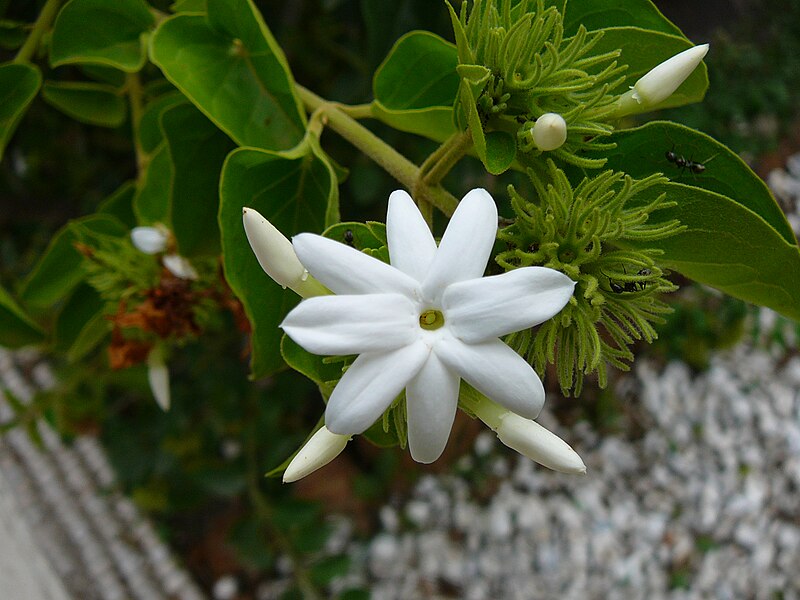
Jasmine/Arabian jasmine flower (Beli ful) - strong scented flower in Bangladesh


চিত্র:JasminumSambac2.jpg
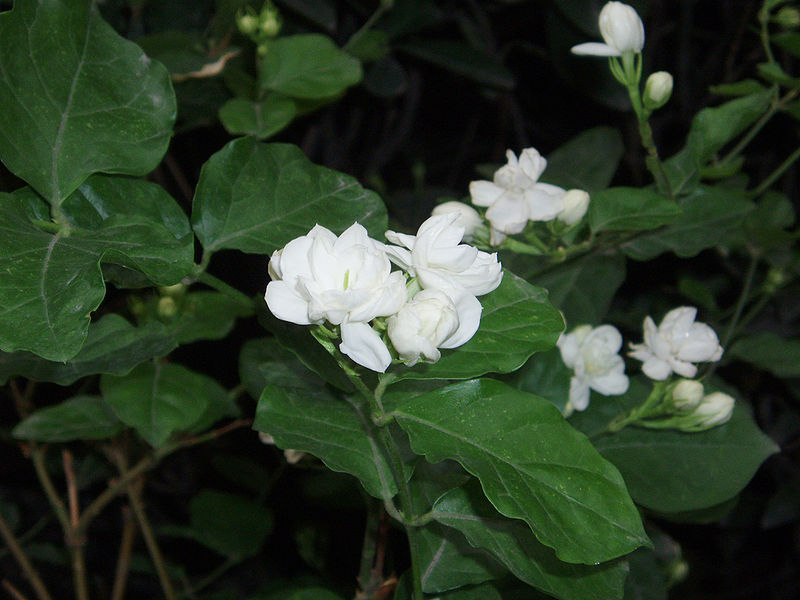
Jasmine/Arabian jasmine flowers and leaves (Beli ful o pata)
চিত্র:Jasminum multiflorum 0001.jpg
Another variant of jasmine/Arabian jasmine flower (Beli ful)
File:My Garden Flower 10.JPG
Another variant of jasmine/Arabian jasmine flower (Beli ful)
File:മുല്ല.jpg
Bud of a jasmine/Arabian jasmine flower (Beli fuler kuri)
File:Jasmine Bud in Chennai during Spring.JPG
Yielding bud of a jasmine/Arabian jasmine flower (Beli ful kuri)
File:Jasminum sambac 'Grand Duke of Tuscany'.jpg
Jasminum sambac - Jasmine/Arabian jasmine flower (Beli ful)
File:JasminumSambac3.jpg
Another variant of jasmine/Arabian jasmine flower (Beli ful)
File:മുല്ലപ്പൂക്കൾ.JPG
Jasmine/Arabian jasmine flower (Beli ful)
File:മുല്ലപ്പൂവ്.jpg
  Jasmine/Arabian jasmine flower (Beli ful)
File:മുല്ലപ്പൂമൊട്ട്.jpg
Jasmine/Arabian jasmine flower's buds (Beli fuler kuri)
File:Flowers worn in hair, Tamil Nadu.jpg
Bangladeshi girls with jasmine flowers garlands as part of
their hair decoration (Beli fuler mala)
File:Garlands of Jasmine flowers.JPG
Bangladeshi girls with jasmine flowers garlands as part of
their hair decoration (Beli fuler mala)

A Bangladeshi girl with jasmine flowers garlands as part of
her hair decoration (Beli fuler mala)


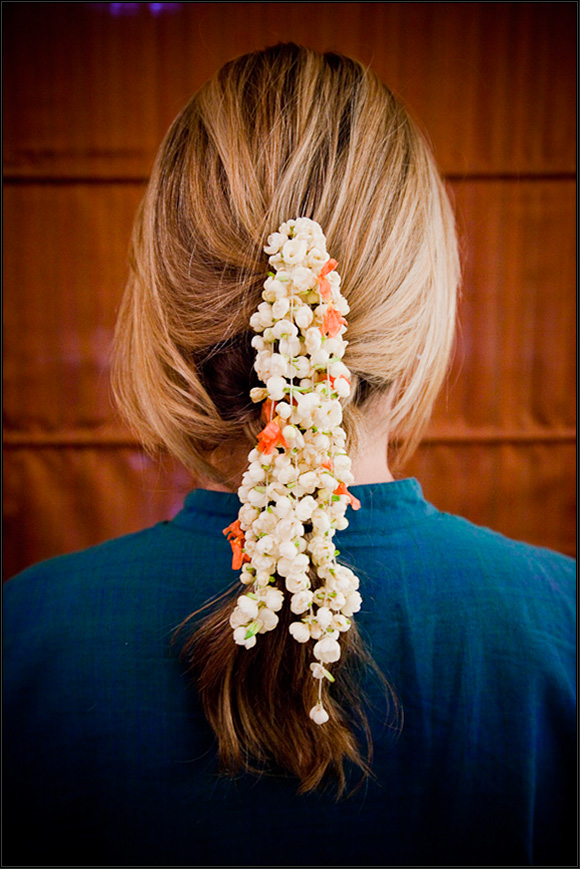
Jasmine Hair
A blond woman with jasmine flowers garlands(Beli fuler mala)

Garland of jasmine/Arabian jasmine (Beli fuler mala)
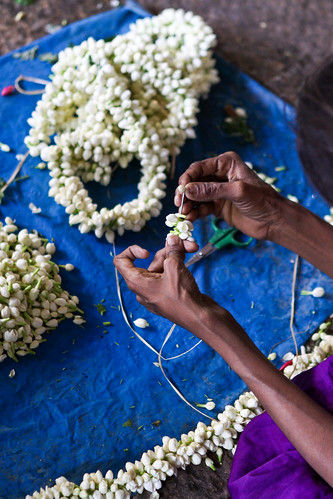
Threading Garlands of Jasmine Flowers
Threading wreath with jasmine flower(Beli fuler mala gatha)

Garlands of jasmine/Arabian jasmine flowers ready to sell in a market

Jasmine flower is commonly known as Beli ful in Bangladesh. In English this flower is also widely known as ''Arabian jasmine''. Scientific name of jasmine/Arabian jasmine flower (Beli ful) is Jasminum sambac. It belongs to the family Oleaceae and specis is J.sambac. Jasmine/Arabian jasmine flower (Beli ful) is the national flower of Philippine and Indonesia.
Jasmine/Arabian jasmine flower(Beli ful) is native to South and South East Asia, that is Bangladesh and eastern part of India. This flower is widely grown throughout the tropical areas from the Arabian peninsula to South East Asia and the Pacific Ocean region.
Jasmine/Arabian jasmine(Beli ful) has been cultivated for thousand of years not only for the beauty of its small,white, star like flowers, but it has also been prized for its intoxicating scent.
This flower plant is a small shrub or vine growing upto 0,5 to 3 meter in height. The leaves of the jasmine/Arabian jasmine flower(Beli ful) plant are ovate, 4 to 12,5 cm long and 2 to 7,5 cm wide. The flowers bloom all through out the year and are produced in clusters of 3 to 12 together at the ends of branches. They are strongly scented, with a white corolla 2 to 3 cm in diameter with 5 to 9 lobes.The flowers open at night, usually around 6 to 8 in the evening and close in the morning. Infact, jasmine/Arabian jasmine flower(Beli ful) is widely cultivated for their attractive and sweetly fragrant flowers. Tipically, the flowers are harvested as buds during early morning. The flowers are used for perfumes and for making tea. The Hindu and the Buddist offer this flower to their goddes and to the Buddha.
There are numerous cultivars of Jasminum sambac which differ from each other by the shape of leaves and the structure of the corolla. There are at least 20 to 30 different varieties of jasmine plant. Only a few varieties reproduce by seed in the wild. Other wise, generally cultivated Jasminum sambac do not bear seeds and the plant is reproduced solely by cuttings, layering, marcotting and other methodsof asexual propagation.
Jasmine/Arabian jasmine flower(Beli ful) is one of the most important flower in wedding ceremonies for Indian, Bangladeshi people and also for Indonesians, especially in the Java island. In Bangladesh and India women use the flowers in their hair for their beautiful fragrance.

S: en.wikipedia.org; care2.com(jasmine,indian flower);toptropicals.com; floridata.com;

Read also: White water lily or Sada Shapla is the national flower of Bangladesh
                   Kadam/Kadambo is a rainy season flower in Bangladesh
                   Water hyacinth (Kochuripana) beauty and death
                   Silk Cotton tree - Shimul ful/Shimul Tular Gash