Sunday, 13 January 2013

Marigold flower or Gada/Genda ful is a common garden flower in Bangladesh

Marigold flower or Gada/Genda ful in orange and yellow color

Tagetes erecta or African-American marigold or Boro Gada/Genda ful

Yellow color African marigold flower or Boro Gada/Genda ful

French marigold flower (Tagetes patula) or Kashmiri Gada/Genda ful

Bicolor French marigold flower or Kashmiri Gada/Genda ful

Red-yellow color sheds of a French marigold or Kashmiri Gada/Genda ful

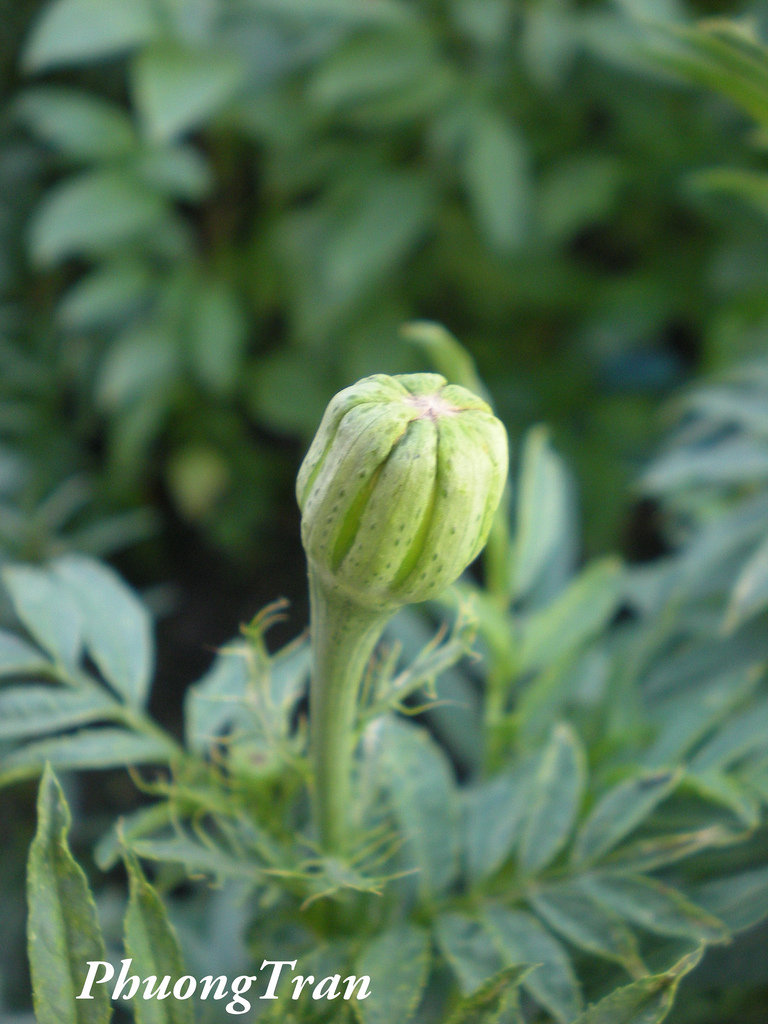
Bud of a marigold flower or Gada/Genda ful

   Leaves of a marigold flower or Gada/Genda ful plant                                                     

Leaves of a marigold flower or Gada/Genda ful plant  

Tagetes erecta or African-American marigold or Boro Gada/Genda ful

Marigold flowers or Gada/Genda ful garlands

For celebrating spring season or Bosonto Utshob in Bangladesh; girls with marigold/Gada ful garlands

Month long celebration starts on the 1st Falgun or pohela Falgun with colorful dress in Bangladesh

In Gaye Holud or wedding shower yellow sharee and marigold or Gada ful garlands is a must

In Gaye Holud or wedding shower ceremony yellow color dress and marigold or Gada ful garlands is a must

Heap of marigold flowers or Gada/Genda ful garlands in a flower market 

Marigold flower is known as Gada or Genda ful in Bangladesh. Though marigold flower is native to Mexico but for centuries this flower has been cultivated in Bangladesh and has become naturalized here. The flowers are yellow, orange, red , light yellow or have bi color sheds and have pungent aroma. 
Marigold flower or Gada/Genda ful belongs to Asteraceae family and its genus is Tagetes.
Gada/Genda ful or marigold flower is also known as tagetes and is a genus that includes about 56 different species. Since the 1920s marigold breeding has developed hundreds of new varieties. In Bangladesh marigold flowers or Gada/Genda ful are seen in different colors, yellow and orange being the most common. White, red and multi colored tones of red yellow or orange are seen all over Bangladesh.
There are many varieties of marigold or Gada/Genda ful and some of them are common and available in Bangladesh. African-American marigold or Gada/Genda ful (Tagetes erecta) is known as Boro Gada/Genda in Bangladesh. The flowers are globe-shaped and large. These flowers are yellow, orange or light yellow in color. Plants can be 91-101 cm (36-40 inches) long in height. Another type of marigold or Gada/Genda ful – French marigold (Tagetes patula) is known as ‘’Kashmiri Gada/Genda’’ in Bangladesh. Plants can grow 12,5-20,5 cm(5 to 8 inches) high. Flowers colors are red, orange and yellow. Red and orange bi color patterns are also found. Flowers are smaller in size.
Now a days marigold or Gada/Genda ful plants grow all most all over the world. Today they are naturalized in the tropical and sub tropical countries. They are easy to grow and have a very long flowering season. They bloom from early summer until winter. In the garden, you will need to water only if the weather has been dry for two weeks. In fact, they need very little care.
Back to history, marigold or Gada/Genda ful is native to the Aztecs, now a day’s Mexico in North America. It is told that in the 1500’s native marigold flower or Gada/Genda ful seeds were taken from the Aztecs by early Spanish invader to Spain. After the Spanish invasion, the Aztecs considered the marigold flower or Gada/Genda ful as a living symbol of the Spanish massacre of their people, the red and the yellow blossoms representing the blood of Indians spilled on gold that the Spaniards had seized. The marigold flowers or Gada/Genda ful were cultivated in Spain and grown in monastery garden. From Spain marigold or Gada/genda seeds were transported to France and Northern Africa. But in Bangladesh and other areas of this region how marigold or Gada/Genda ful came and started to cultivate has different explanation. Some sources say that the Portuguese brought marigold or Gada/Genda ful from Brazil and exported it around the world, along with Bangladesh and the South Asian region in the 16th century. Thus marigold flowers or Gada/Genda ful were introduced here. Marigold or Gada/Genda ful has become important in our everyday life. They are used in ceremonies, as offerings and for decoration all over this region.
In Bangladesh, marigold flowers or Gada/Genda ful have a vital roll in the folk – culture, like the marriage-ceremony, Bosonto Utshob(spring celebration). In the part of marriage ceremony in ‘’Gaye Holud’’ or ‘’wedding – shower’’ ceremony people can’t think without marigold flower or Gada/Genda ful. Yellow or orange colored sharee and marigold flowers or Gada/Genda ful garlands are the best combination for the girls and is a must. Even in the Bosonto Utshob or celebrating Spring season (according to bangla calendar spring season consists of bangla calendar month Falgun and Choitra) marigold flower or Gada/Genda ful is essential. From the 1st Falgun people start to celebrate the month long festival by wearing yellow color dress and especially girls decorate themselves by  marigold flowers or Gada/Genda ful garlands.
Marigold or Gada/Genda ful plants have many uses as medicinal purposes.  Marigold or Gada/Genda ful plant is used to treat a number of skin diseases including eczema, juvenile acne and skin ulcerations. In Bangladesh  marigold or Gada/Genda ful plant’s leaves  sap is used to stop bleeding. Most of the households in Bangladesh have marigold or Gada/Genda ful plants in their garden or in flower pot.

S: en.wikipedia.org; flowerforyou.org; ehow.com; theflowerexpert.com; kew.org
    All the images are collected from different web sites

Sunday, 25 November 2012

National martyrs' memorial or Jatiya Sriti Shoudho – a architectural symbol of Bangladesh


National martyrs' memorial or Jatiya Sriti Shoudho of Bangladesh


A reflecting pool infront of the National martyrs' memorial or Jatiya Sriti Shoudho


Foundation stone laid by father of nation Sheikh Mujibur Rhaman

Information board in side the Sriti Shoudho Complex

A aerial view of National martyrs' memorial or Jatiya Sriti Shoudho

National martyrs' memorial or Jatiya Sriti Shoudho under construction

National martyrs' memorial or Jatiya Sriti Shoudho under construction


National martyrs' memorial or Jatiya Sriti Shoudho under construction


National martyrs' memorial or Jatiya Sriti Shoudho under construction


Just after complition of construction work of National martyrs' memorial or Jatiya Sriti Shoudho 


Now a days National martyrs' memorial or Jatiya Sriti Shoudho of Bangladesh


Piramidial view of  National martyrs' memorial or Jatiya Sriti Shoudho  


Another view of National martyrs' memorial or Jatiya Sriti Shoudho


Another view of National martyrs' monument or Jatiya Sriti Shoudho


A distinctive pattern of the Sriti Shoudho just after construction 

A unique distinctive pattern of the Sriti Shoudho


From the entrence gate view of the National martyrs' memorial or Jatiya Sriti Shoudho 

Lake in side of the National martyrs' memorial or Jatiya Sriti Shoudho complex

Administrative buildning and main entrance gate view from inside the complex   

Mosque inside the National martyrs' memorial or Jatiya Sriti Shoudho

For the memory of the martyrs'
 nation has built a national martyrs' memorial or Jatiya Sriti Shoudho

Towers base of the national martyrs' monument or Jatiya Sriti Shoudho

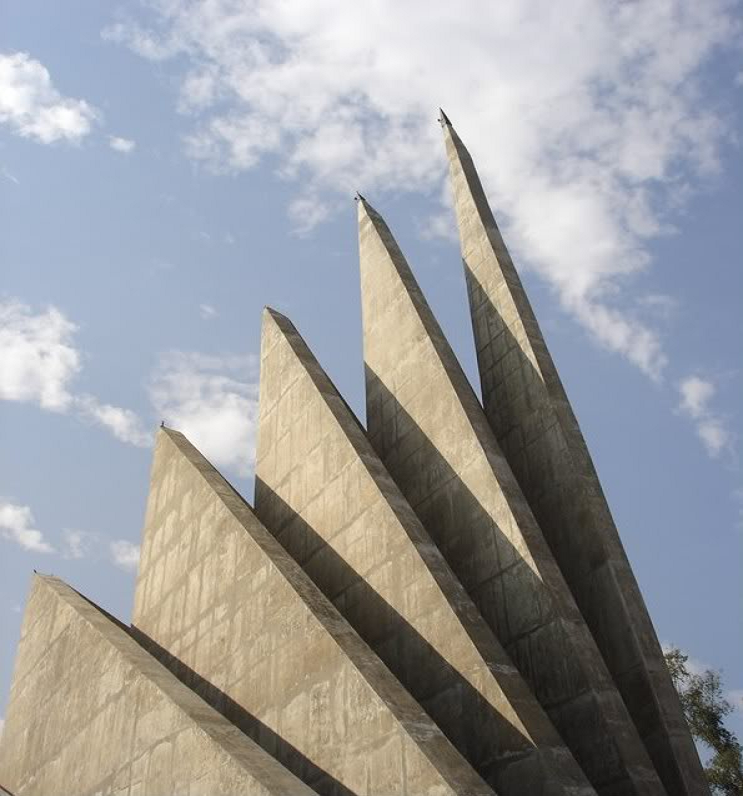
Towers of the National martyrs' or Jatiya Sriti Shoudho made of concrete

A aerial view of National martyrs' memorial or Jatiya Sriti Shoudho

People pay their homage to the martyrs' at Jatiya Sriti Shoudho

Architectural symbol of Bangladesh-National martyrs' memorial or Jatiya Sriti Shoudho 


A long distance axil view of national martyrs' memorial or Jatiya Sriti Shoudho

A unique view of the National martyrs' memorial or Jatiya Sriti Shoudho at night

For the memory of the living freedom fighters and of the martyrs' those who have sacrificed their lives to liberate their homeland Bangladesh, in memory of them nation has built a national martyrs' memorial or in Bangla we say Jatiya Sriti Shoudho. The war of liberation began on 26 March, 1971 and ended in the victory on 16 December, 1971 by defeating West Pakistan, now a days Pakistan's military forces and their local collaborators. Three million undoubting patriots laid down their lives in this struggle for freedom. The memorial is dedicated to the memory of the heroic struggle of the people and as a mark of respect of an indebted nation of the martyrs.
The Jatiya Sriti Shoudho or the national martyrs’ memorial is situated at Nobinagar, Savar; about 35 km northwest of Dhaka city. By bus or by car you can come here. Communication is much easier and comfortable.
Few months after the independence, the then government decided to make a unique national monument for the memory of the unforgettable unsung heroes of the country. The foundation stone of the monument was laid at Savar on16 December, 1972 by the father of nation Sheik Mujibur Rhaman.
To build a unique and special monument the project committee arranged a nation-wide design competition in June, 1978.  Among the submissions of 57 designs, architect Syed Moinul Hossain’s design proposal was selected. In his design there were seven towers to compose the whole structure. The shape of the towers are isosceles triangular. The area of the monument and its compound is 34 hectares (84 acres) with a surrounding buffer zone of additional 10 hectares (24 acres) green belt of planted bushes and trees. The monument with its pointed spires stands to speak of the victory and triumph and link the patriotic people, the shaheed and the living freedom fighters in an eternal bond. The tower tapers upwards on seven isosceles triangles signifying the seven stages of the national movement that led to the independence of the country. The seeds of the movement sprouted through the struggle for the honour of the national language, Bangla in 1952 and thereafter grew in phases through the mass upheavals of 1954, 58, 62, 66, 69 and eventually the liberation movement in 1971.
The project of the national martyrs’ memorial’s construction was completed in three phases at a total cost of 130 million taka. Work started in July, 1972 and ended in June, 1988.  Project committee and government selected the project site at Savar, out of the Dhaka city. The first phase started with acquiring lands from the farmers and at the same time project committee paid to the land owners as per market price. Then they started to develop the area and road construction for the project. Tk.26 lacs or 2,6 million BD Tk were spent for the first phase. It’s a good question that why the project committee choose the site at Savar. I think this location is beside the Dhaka- Aricha road, not so far from Dhaka city and Savar was the entry point for the freedom fighters to enter in Dhaka, leading the freedom fighters towards Dhaka by Tiger Kader Siddique and allied force army officer Major General Nagra.
Between the years 1974 to 1982 is regarded as the second phase. During this time Tk 3 crore and 77 lacks or 37, 7 million BD Tk were spent. Within this period mass-graves, helipad, parking space, pavements were built.
Third phase started August in the year 1982 and ended in June 1988. The main structure that of the monument that is the seven isosceles towers were built in this period. The towers were completed in record time of 3 months by M/S Concord Ltd. Using local technology of bamboo scaffolds. In this phase Tk 8 crore 48 lacks and 65 thousand or approx. 84,9 million BD Tk were spent.
The National Martyrs Memorial or Jatiya Sriti Soudho consists of seven isosceles towers. Considering to base wideness the towers are different in shape. The smallest tower has a broadest base and the largest tower has the tiniest base. The base of this structure is 39 meter (130 feet) while the longest tower of the monument is 45 meter (150 feet) high. You can see the axial view of this monument when you enter in the compound of this monument. The towers are arranged unequally so that you will see its distinctive patterns when you look it from different angles. The arrangement of the seven towers is unique. These unequaled combinations of the towers make it different from other monuments. Usually all kinds of monuments are finished of crimson bricks. However, this monument is different and the history of Bangladesh is presented by this monument. Therefore it’s making must be extraordinary. Concrete is used to make the towers. Red colors bricks have used throughout the complex area of the monument. This color represents blood for achievement of independence. Green field and green belt around the monument complex symbolizes green Bangladesh.   An artificial lake, a twin bridge, a reflecting pool and a picturesque garden surround the monument. The twin bridge crossing a natural canal leads to the most sacred part of the monument where ten graves of martyrs are preserved as marks of respect to the countless unknown freedom fighters who laid down their lives for their motherland. The complex also contains an open –air stage, reception room, mosque, green house, twin helipads and a cafeteria. There was also a plan of making a museum and a library in the design. The arms and relics used in the liberation war were decided to keep in the museum. The library will keep the books consist of the history of the liberation war which will create consciousness about how the freedom fighters sacrificed their lives to keep free the Bangladeshi people from tyranny and torture and that has given us independence. But that have not done in the monument complex area.  Master plan of the monument and all other architectural drawings of the complex excepting main tower have been designed by the Architects of the Department of Architecture, Government of the Peoples Republic of Bangladesh. Renowned architect Syed Moinul Hossain has designed the main tower of the monument. Entire construction work has been done by the Public Works Department of the Government of the Peoples Republic of Bangladesh.
The national martyrs' monument or Jatiya Sriti Shoudho is the national architectural symbol of Bangladesh. To keep this monument stands upright with honour, prestige and dignity we need to be ready always to sacrifice our lives also.

S: banglapedia.com; dhakadailyphoto.blogspot.com; informationbangladesh.com;  information board inside the Sriti Shoudho complex
All the images are collected from different web sites and special courtesy to Rainer Ebert's photostream  in flickr.com
                      Concert for Bangladesh -the first benifit concert in the music history

Saturday, 18 August 2012

Jahaj Bari or boat house(Chistia Palace):amazing architecture on Dhanmondi lake side

Jahaj Bari or boat house
Lake side view of  Jahaj/Jahaz Bari or Chistia/Chistiya Palace
Chistia/Chistiya Palace or Jahaj Bari

Close view of the main tower or minaret of the Jahaj/Jahaz Bari

Partial view of the roof and inside the boundary space
Partial view of the roof and other side of the Jahj Bari
Close view of the Jahaj/Jahaz Bari
Close view of  Jahaj Bari or Chistia Palace
Full view of Jahaj/Jahaz Bari or Chistiya Palace
Back side of the Chistiya/Chistia Palace
Front view of the Jahaj Bari shaped as a ship
Partial view of the front side of Jahaj Bari or Chistia Palace
Walking way beside the Jahaz/Jahaj Bari and the boundary wall
Night view on the Dhanmondi lake side Jahaj/Jahaz Bari or Chistiya Palace
View of Jahaj Bari or Chistia Palace without boundary wall in 1997


A aerial view of Jahaj/Jahaz Bari or Chistiya Palace in 1997


This red house with a tall tower like minaret besides the Dhanmondi lake is locally known as “Jahaj Bari”(boat house). But the owner of this house has named this house “Chistiya/Chistia Palace”. He adopted the name of the silsila or spiritual order of the Chistia founded by Khwaja Mainuddin Chisti(R.A.). This magnificent palace is owned by Mr. A.K.M. Anwarul Huq Chowdhury popularly known as Sher-e-Khwaja - a religious leader cum business tycoon, a charismatic person with high connection abroad and widely traveled.
This is one of the nice house and popular spot of the locality. While passing by Shatmasjid road it is hard not to notice the red-brick castle near old road 13, now road 5, overlooking Dhanmondi Lake. The huge majestic structure with its domes and pyramid-like protrusions reminds one of Disneyland’s Magic Kingdom or a palace right out of the Arabian Nights. Dhaka City Corporation Authority broke down the side construction on the bank of the lake of this house. DCC made a walking road besides the lake. Then the owner made the boundary wall shaped like a ship. Before that there were coconut trees on the lake’s bank side of the house and no boundary.
 This type of palace is a renaissance to Islamic architecture, it is outlined to show the name of God ‘Allahhu’ in Arabic from particular angle. The tall tower regards as ‘alif’ and the two adjacent structures representing ‘laam’ and ‘he’.
 So far as we can know that Sher.e-Khwaja was a student of the then Jagannath College and claimed himself that he took part in the liberation war of Bangladesh. He was the Chairman of the ‘Chistia Group of Industries’ with trading businesses in Bangladesh and England. His business includes garments, household goods and a construction consultancy. He was also the founder of WPEDO NGO.
He breathed his last on the 15th November 2011, at Mount Elizabeth Hospital in Singapore on Tuesday at the age of 59.  He left behind his wife, one son and one daughter.
This colossal structure has been designed, architect and engineered as claimed by Sher-e-Khwaja even the unbelievable designs and lay out inside this palace has been done by himself . In an interview he told that the entire concept and mode of the project came to him in a trance.(The Bangladesh Observer, April 11, 1997). The impressive complex was probably started to build in the year 1993 and completed in the year 1994. This complex has about 40 rooms. This house is now used as Sher-e-Khwaja’s family resident and as head office of Chistia Group and WPEDO.

S: sher-e-khwaja.com; dhakadailyphoto.blogspot.com; flickr.com(for some photos); The Daily Star, september 9, 1994.

Read also: Lonely Planet-Bangladesh is the best value destination for 2011